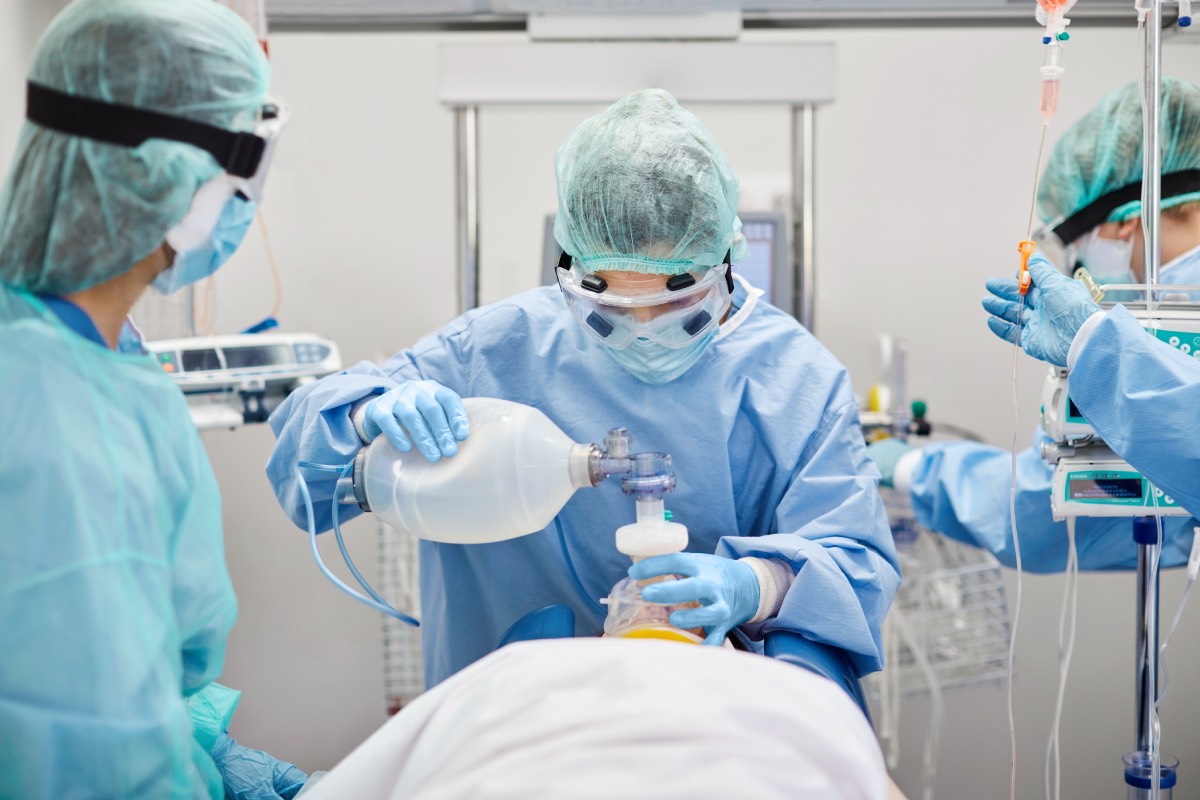
Endotracheal intubation is a common but often challenging part of anesthetic and critical care, marked by a high risk of hypoxemia. Traditionally, oxygenation during intubation has relied on bag-mask ventilation (BMV) or other forms of positive-pressure ventilation between induction and laryngoscopy. However, there is growing interest in high-flow nasal oxygenation (HFNO) as an alternative to ventilation, particularly for apneic oxygenation during intubation.
High-flow nasal oxygenation delivers warmed, humidified oxygen at flow rates typically ranging from 30 to 70 L/min via wide-bore nasal cannula. This approach provides several physiological advantages, including washout of nasopharyngeal dead space, generation of low-level positive airway pressure, and continuous delivery of oxygen during apnea. High-flow nasal oxygenation may extend safe apnea time and reduce the risk of desaturation, thus facilitating intubation attempts.
Multiple randomized and observational studies in operating room, emergency department, and intensive care unit settings have demonstrated that HFNO improves oxygen saturation during intubation compared with standard low-flow oxygen delivery. In patients with anticipated difficult airways or mild-to-moderate hypoxemia, HFNO has been shown to delay desaturation and increase first-pass intubation success by maintaining higher oxygen reserves. Its hands-free nature also facilitates airway manipulation and may reduce gastric insufflation compared with positive-pressure mask ventilation.
However, high-flow nasal oxygen does not provide ventilation or carbon dioxide clearance during apnea, which is sometimes necessary during intubation. In patients with severe hypoxemia, obesity, or high oxygen consumption, oxygenation alone may be insufficient, and rapid desaturation can still occur. Additionally, HFNO may be less effective in cases of upper airway obstruction or poor nasal patency. Other studies on this approach have shown mixed results, with a 2015 randomized trial demonstrating that HFNO did not make a significant difference in lowest oxygen saturation during intubation in critically ill patients with acute respiratory failure.
Bag-mask ventilation remains a reliable method for both oxygenation and ventilation during intubation, particularly in patients with severe hypoxemia or hypercapnia. When performed with appropriate technique and airway adjuncts, BMV can effectively maintain oxygenation and carbon dioxide elimination. Concerns regarding aspiration risk with positive-pressure ventilation have been challenged by evidence suggesting that gentle ventilation with low inspiratory pressures does not significantly increase aspiration events and may reduce hypoxemia-related complications.
In elective surgical patients with adequate preoxygenation and low risk of complications, HFNO may be used as a primary strategy for apneic oxygenation during rapid sequence induction. However, many patients—particularly those who are hypoxemic or have comorbidities that increase the risk of desaturation—may benefit more from active ventilation using bag-mask ventilation, noninvasive ventilation, or a combination of high-flow nasal oxygenation with assisted ventilation prior to intubation. Some studies suggest that combining HFNO with noninvasive ventilation during preoxygenation offers superior oxygenation compared with either technique alone.
High-flow nasal oxygenation and conventional ventilation during intubation have distinct advantages and limitations. HFNO is particularly useful for extending safe apnea time and maintaining oxygenation during laryngoscopy, while bag-mask ventilation provides more reliable gas exchange in high-risk patients. Optimal airway management should be tailored to patient physiology, clinical setting, and operator expertise, rather than relying on a single universal strategy.
References
1. Patel A, Nouraei SA. Transnasal humidified rapid-insufflation ventilatory exchange (THRIVE): a physiological method of increasing apnoea time in patients with difficult airways. Anaesthesia. 2015;70(3):323-329. DOI: 10.1111/anae.12923
2. Miguel-Montanes R, Hajage D, Messika J, et al. Use of high-flow nasal cannula oxygen therapy to prevent desaturation during tracheal intubation of ICU patients. Am J Respir Crit Care Med. 2015;193(10):1140-1147. DOI: 10.1097/CCM.0000000000000743
3. Casey JD, Janz DR, Russell DW, et al. Bag-mask ventilation during tracheal intubation of critically ill adults. N Engl J Med. 2019;380(9):811-821. DOI: 10.1056/NEJMoa1812405
4. Semler MW, Janz DR, Lentz RJ, et al. Randomized trial of apneic oxygenation during endotracheal intubation of critically ill patients. Am J Respir Crit Care Med. 2016;193(3):273-280. DOI: 10.1164/rccm.201507-1294OC
5. Frat JP, Thille AW, Mercat A, et al. High-flow oxygen through nasal cannula in acute hypoxemic respiratory failure. N Engl J Med. 2015;372(23):2185-2196. DOI: 10.1056/NEJMoa1503326